
An analysis of how early nutrition, the gut microbiome, and infantile metabolic programming are redefining the prevention of chronic diseases.
By Ehab Soltan
HoyLunes – In any given consultation, a pediatrician observes a newborn. The picture is one of comforting normality: the weight is appropriate, the breathing is rhythmic, and the reflexes respond with clockwork precision. However, beneath this calm surface, one of the most fascinating scientific battles of our century is being fought. The question is no longer just whether the baby is healthy today, but: Is their body, at fifty years old, beginning to define itself at this very instant?
For decades, pediatrics was a discipline of “maintenance”: preventing infections and ensuring growth. But today, a wave of research led by global institutions supports a much more ambitious thesis: early childhood is not just a stage of development; it is the period of biological programming that will dictate an adult’s resilience or vulnerability to diabetes, obesity, or cardiovascular disease.
This shift in perspective does not emerge in a vacuum. Non-communicable chronic diseases—diabetes, obesity, and cardiovascular pathologies—currently represent over 70% of global deaths, according to the World Health Organization. For years, it was assumed that these pathologies were almost exclusively the result of adult habits; however, growing epidemiological evidence suggests that their origin lies decades earlier, in the biological environment surrounding the fetus and the child in their first years of life.
The DOHaD Concept: When the Body Writes Its Destiny
Modern science terms this phenomenon Developmental Origins of Health and Disease (DOHaD). It is not an abstract theory, but the study of extreme plasticity. During pregnancy and the first two years of life, the child’s metabolism, immune system, and hormonal axis are like fresh clay.
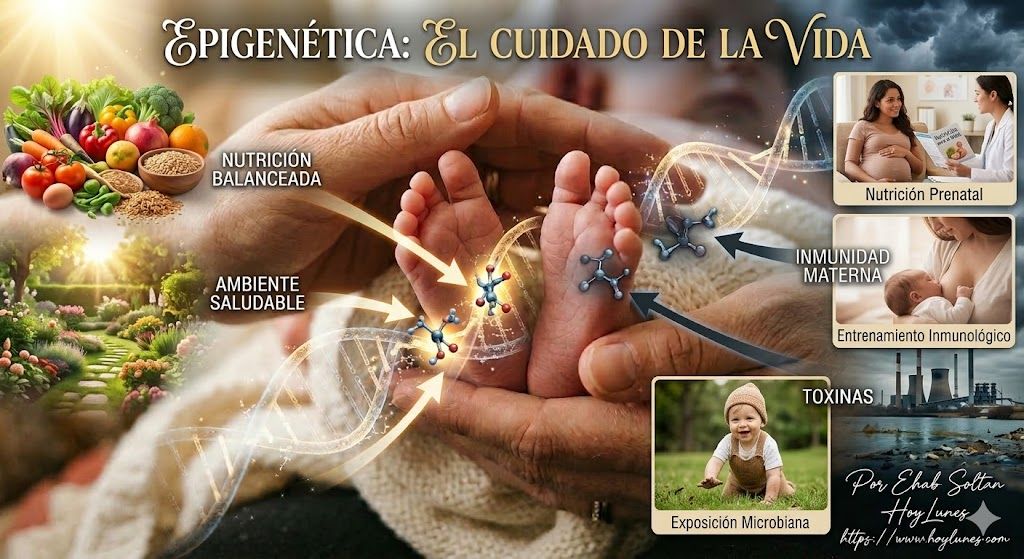
The signals the environment sends within this window of the first 1,000 days—from maternal nutrition to the air the baby breathes—modify gene expression without altering the DNA. This is epigenetics in action: a switch that can remain on or off forever, programming the risk of chronic diseases long before the first symptom appears.
Researchers analyze this phenomenon through large longitudinal cohorts that follow thousands of individuals from gestation to adulthood. These investigations combine genetics, nutrition, epidemiology, and molecular biology to identify long-term risk patterns. Programs driven by the National Institutes of Health and international scientific networks have consolidated the DOHaD field as one of the most dynamic areas of contemporary preventive medicine.
The Three Pillars of Infantile Architecture
To understand this revolution, we must observe three critical systems that are “configured” in the cradle:
The Metabolic Code: Prenatal nutrition and feeding in the first year do not just provide calories; they are chemical instructions. Studies on the Dutch Famine of 1944–45 demonstrated that adults exposed to fetal undernutrition developed an extreme “thrifty” programming, making them more prone to obesity and diabetes in environments of abundance. The explanation lies in the “thrifty phenotype hypothesis”: when the fetal organism perceives scarcity, it adjusts its metabolism to conserve energy. This mechanism, adaptive in famine, becomes a risk factor faced with modern caloric excess.
Immunological Training: The infantile immune system must learn to distinguish between allies and enemies. Factors such as the type of delivery, antibiotic use, and breastfeeding decisively influence microbial colonization. Institutions like ESPGHAN investigate how a diverse microbiome in the first months prevents the immunological chaos that leads to allergies, inflammatory bowel diseases, and metabolic disorders.
The Brain–Gut Axis: Neuroimmunology has discovered that early gut bacteria influence neurological development and stress regulation. Pediatrics merges here with developmental psychiatry: adult mental health could have deep roots in the infant’s gut ecology.
Pediatrics as Strategic Medicine
If we accept that the first years are decisive, pediatrics ceases to be a transitional specialty to become the biological architecture of society. It is not just about curing acute processes, but about designing healthy adults.
Various analyses suggest that interventions in the first years present one of the highest social returns in medicine. Improving maternal nutrition or reducing exposure to pollutants can decrease, decades later, the incidence of severe pathologies. This poses an uncomfortable contradiction: Why do we invest fortunes in treating chronic diseases in old age and so little in protecting the initial biological programming? It is the paradox of the system: we spend on repairing the building when we should have invested in the solidity of the foundation.

Three Provocative Frontiers
Pediatrics as Biopolitics: Investing in child nutrition is likely the most profitable economic intervention in public health in the long term.
The Microbiome as a Mirror: In the future, analysis of early microbiota could function as a clinical biomarker to predict risks in a personalized manner.
The Transgenerational Legacy: Science suggests epigenetic effects that skip generations. A mother’s health today protects not only her child but potentially her future grandchildren.
Even so, researchers insist that biological programming does not imply absolute determinism. The first years create a predisposition, not an immutable destiny. Later factors such as diet and physical activity continue to influence health. Understanding the first 1,000 days means broadening prevention, not simplifying human complexity.
We are facing a new era. The fundamental question for 21st-century medicine is no longer how much we can prolong life, but how well we care for its origin. If childhood is the mold where the health of coming decades is forged, early pediatrics must be considered the single greatest strategic investment of any nation.
Question for Reflection:
If science demonstrates that the first thousand days determine much of our future health, should governments consider early pediatrics as the single greatest strategic investment in public health, above any other infrastructure?
Recommended Sources and Scientific Rigor
WHO (OMS): [Early Childhood Development](https://www.who.int/publications/i/item/9789240031114)
National Institutes of Health (NIH): [DOHaD Research Focus](https://www.nichd.nih.gov/health/topics/dohad)
DOHaD Society: [Developmental Origins of Health and Disease](https://dohadsoc.org)
ESPGHAN: [European Society for Paediatric Gastroenterology, Hepatology and Nutrition](https://www.espghan.org)
#PreventivePediatrics #First1000Days #MetabolicHealth #HoyLunes #EhabSoltan #FutureMedicine
This is for informational purposes only. For medical advice or diagnosis, consult a professional.